
Can a transaction be dangerous even when the wallet shows the correct token, contract, and amount? Yes—and that is the central difficulty of risk assessment in decentralized finance. A transaction is not merely a message saying “send these assets.” It is executable code, interpreted by a smart contract under changing market conditions, then ordered among other transactions. The visible request may look harmless while the resulting state change is expensive, irreversible, or vulnerable to extraction by other market participants.
Transaction simulation and MEV protection are useful because they expose different parts of this problem. Simulation asks, “What would probably happen if this transaction executed now?” MEV protection asks, “Who might observe, reorder, or exploit it before execution?” Neither is a universal safety guarantee. Together, however, they create a more realistic decision process than simply checking whether a website looks familiar or whether a transaction was signed successfully.
The first misconception: a successful transaction is not necessarily a safe transaction
Many users treat blockchain confirmation as the final measure of correctness. That is a category error. Confirmation proves that the network accepted the transaction and recorded its effects; it does not prove that the user received a fair price, interacted with the intended contract, or avoided an approval that remains dangerously broad.
Consider a token swap. The user may expect to exchange one asset for another, but the transaction can contain several distinct risks: an unfavorable exchange rate, excessive slippage, an unexpected token transfer, or a call routed through a contract the user did not understand. A wallet that parses the transaction into plain-language effects gives the user a chance to inspect the outcome before signing. That is already more informative than viewing raw calldata or relying only on a familiar application interface.
Simulation works by executing the proposed transaction against a representation of the current blockchain state. It can estimate balance changes, identify whether a call is likely to revert, and reveal contract interactions that are not obvious from the front end. The important word is “estimate.” The simulation is a forecast of execution under particular assumptions, not a time machine.
Between simulation and inclusion in a block, the state can change. A liquidity pool may move, an oracle value may update, a lending position may approach liquidation, or a competing transaction may be ordered first. A simulation can therefore be accurate about what would happen at one moment and still differ from the final result. The value of simulation is not certainty; it is the removal of avoidable surprise.
MEV protection addresses a different layer of risk
MEV, or maximal extractable value, describes value that can be gained by controlling or influencing the ordering, inclusion, or exclusion of transactions. In practical DeFi terms, this can involve a searcher placing a transaction before yours, after yours, or around yours to profit from the price impact your order creates. A large or poorly protected swap is an obvious example, but the broader issue is that a pending transaction can reveal information about your intended action.
Suppose a user submits a sizeable trade to a public transaction pool. Other participants may see its parameters before it is finalized. If the trade is likely to move the market, a searcher can attempt to buy before it and sell after it, leaving the original trader with a worse execution price. This is commonly described as sandwiching. The user may still receive the expected token, and the transaction may still be confirmed successfully, but part of the economic value has been transferred to the searcher.
MEV protection can reduce this exposure by changing how transactions are relayed or ordered. A private submission path may prevent the transaction from being broadly visible in the public pool. A protected routing system may also seek execution methods that reduce predictable price impact. These approaches can be valuable, especially for swaps with meaningful size relative to available liquidity.
They introduce trade-offs. Private or specialized routing may depend on particular infrastructure, may not be available on every network, and may change the set of parties able to observe or process the transaction. It can also affect speed, inclusion reliability, or fee behavior. Protection is therefore not the same as invisibility, and it is not a guarantee that the best possible price will be obtained.
Three ways to reduce transaction risk—and what each sacrifices
The first approach is careful manual review. A user checks the destination contract, method, token amounts, approvals, network, and expected outcome before signing. This method is transparent and does not require special infrastructure, but it is cognitively demanding. Raw transaction data is difficult to interpret, and even experienced users can miss an unusual delegate call or an approval that grants more authority than intended.
The second approach is transaction simulation. It moves the review from “Does this call look familiar?” toward “What state changes does this call produce?” That is a major improvement for complex DeFi interactions. Simulation can flag likely failures, show asset movements, and make malicious or accidental behavior more visible. Its limitation is that it depends on the simulated state and the ability of the simulation system to interpret the contract. Highly dynamic contracts, unusual execution paths, unsupported networks, and changes after simulation can reduce its reliability.
The third approach is execution protection, including MEV-aware routing or private transaction delivery. This is most relevant when transaction visibility and ordering materially affect the result. It can reduce certain forms of front-running and sandwich risk, but it does not replace contract review. A private transaction can still call a malicious contract. A protected swap can still have poor liquidity, unfavorable parameters, or an overly generous approval.
These methods should not be viewed as competing substitutes. They address different failure modes. Manual review primarily examines intent and authorization. Simulation examines probable effects. MEV protection examines information exposure and ordering. A serious risk assessment asks whether all three layers are relevant to the transaction at hand.
A practical risk framework for US DeFi users
Before signing, separate the transaction into four questions: what authority is being granted, what assets may move, what market conditions determine the result, and who can observe or reorder the action? This framework is more useful than a single “safe” label because different transactions fail in different ways.
Authority is especially important for token approvals. An approval is not the same as a swap; it gives a spender permission to move tokens later, subject to the approved amount and contract behavior. A user who reviews only the immediate balance change may overlook the longer-lived permission. When possible, limit approvals to the amount needed, understand which contract receives the permission, and periodically review permissions that are no longer necessary.
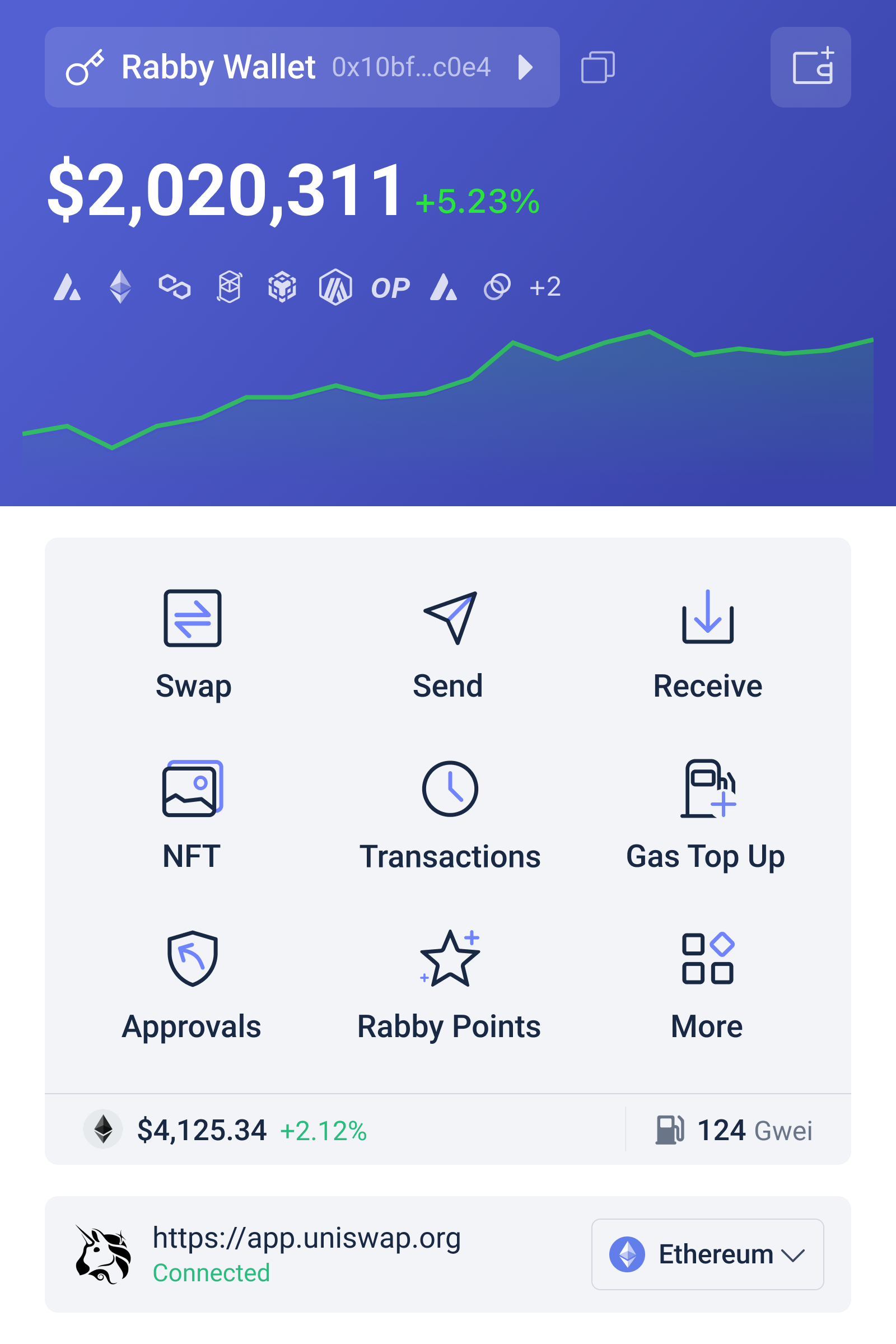
Asset movement should be checked at the level of net effects. Ask which tokens leave the wallet, which tokens arrive, whether a fee recipient is involved, and whether the transaction interacts with an unfamiliar contract. A polished DeFi interface can compress many calls into one user action. That convenience is useful, but it also makes an independent wallet-level interpretation more valuable. Tools such as rabby wallet are most useful here when their warnings and simulations are treated as evidence to examine, not as permission to stop thinking.
Market conditions determine whether slippage and MEV matter. A small trade in a deep pool may tolerate ordinary variation, while a large trade in a thin pool can create substantial price impact. Slippage limits are not magic shields: setting them too tightly can cause failure, while setting them too loosely can permit an unexpectedly poor fill. The appropriate limit depends on liquidity, volatility, urgency, and the cost of retrying.
Finally, consider observability. If a transaction is large, predictable, and likely to move a market, public visibility may carry a meaningful cost. MEV protection becomes more relevant in that setting. For a simple transfer to a known address, it may add little. Risk controls should be proportional; adding complexity everywhere can create new operational mistakes, including choosing the wrong network or delaying a time-sensitive action.
Where transaction simulation breaks down
The most important limitation is temporal. Simulation is performed before execution, but DeFi is a competitive environment in which state changes continuously. A simulated balance may become stale. A route may no longer be available. A lending protocol may calculate a different health factor after another position changes. The closer the transaction is to a volatile market event, the more cautiously the result should be interpreted.
There is also a semantic limitation. Simulation can report what the virtual machine did, but the user still needs to understand whether that outcome is economically sensible. A transaction may execute without reverting and still produce a poor result. Code-level success is not the same as financial success. This is why expected output, minimum received, fees, approvals, and contract identity should be reviewed together.
Warnings can have false positives and false negatives. A legitimate new contract may look unfamiliar, while a compromised or malicious application may have a credible history and professional design. No wallet interface can observe every off-chain compromise, governance decision, oracle failure, or economic attack. The strongest posture is layered: use simulation, limit permissions, protect exposed trades, verify the application and network, and keep a separate mental model of what the transaction is supposed to do.
What to watch next
If wallet tooling becomes better at combining simulation, permission analysis, and execution routing, the most useful improvement may not be more warnings. It may be better prioritization. Users need to know whether a warning concerns a reversible inconvenience, a likely loss of execution quality, or an authorization that could endanger an entire token balance. In that scenario, the quality of risk assessment will depend on context rather than on the number of alerts displayed.
The open question is how much judgment users will delegate to automated protection. As interfaces become more capable, convenience may encourage users to approve actions they do not understand. The reasonable near-term expectation is conditional: better simulation and MEV-aware delivery should reduce some avoidable losses, provided users recognize their boundaries and protocols remain compatible with the systems providing those protections.
Frequently asked questions
Does transaction simulation guarantee that a DeFi transaction is safe?
No. It estimates the transaction’s effects against a particular state and can identify likely reverts or unexpected asset movements. It cannot guarantee that the state will remain unchanged, that a contract is economically sound, or that the final execution will match the estimate.
Is MEV protection necessary for every transaction?
No. It is most valuable when a transaction is publicly observable, sensitive to ordering, and large enough for another party to profit from changing its execution. It is less central for ordinary transfers, although contract and address verification remain important.
What is the most reusable safety rule?
Review the intended authority, expected asset changes, market-dependent parameters, and exposure to ordering risk separately. A transaction is easier to assess when “What will it do?”, “What may it cost?”, and “Who can exploit its timing?” are treated as distinct questions.